

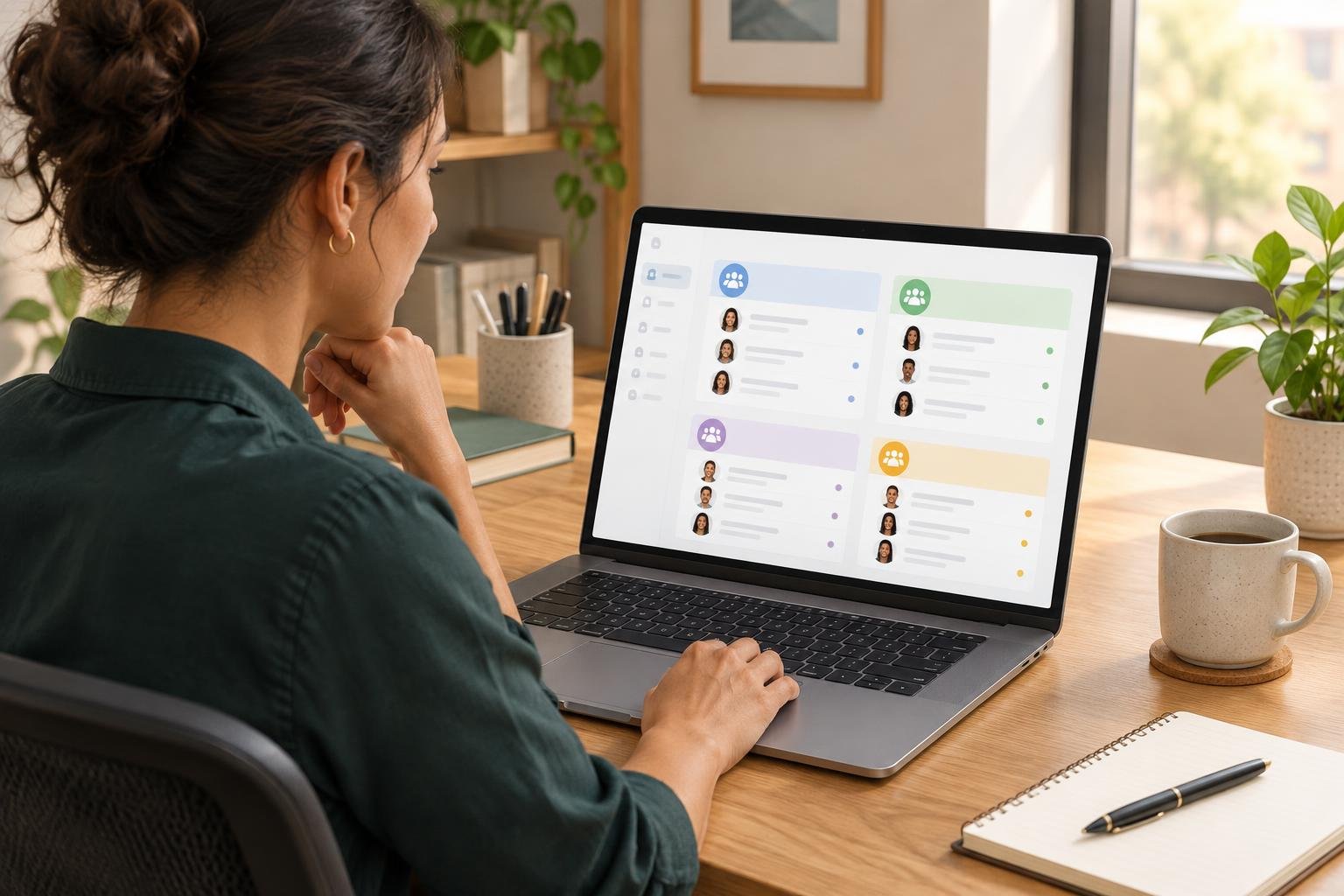
Email subscribers join for different reasons, have different interests, and may be at very different points in a buying decision. Sending every person the same message can make your emails less useful, even when the offer itself is a good fit. Email list segmentation gives you a practical way to tailor campaigns to what you know about each subscriber.
You do not need a complicated marketing platform or dozens of customer profiles to get started. A few thoughtful groups, based on information you can collect and maintain responsibly, can help you send more relevant content. This guide explains what to segment, how to build useful groups, and how to evaluate the results.
What email list segmentation means
Email list segmentation is the practice of dividing subscribers into smaller groups according to shared characteristics or actions. Instead of sending one campaign to your entire list, you choose an audience that is more likely to find that message relevant.
Possible groups include new subscribers who have not purchased, returning customers, people interested in a particular service, or subscribers who clicked a recent product email. People can belong to several segments at once. A customer, for instance, might be both a repeat buyer and someone interested in a specific product category.
Segmentation is different from personalization, though the two can work together. A segment determines who receives a message. Personalization adapts elements of the message, such as a name, product recommendation, or next step, to an individual subscriber.
Why segment your email list?
Segmentation helps you match the message to the recipient. New subscribers may need an introduction to your business, while long-time customers may benefit more from product guidance or a related offer. Sending each person the same promotion can overlook those differences.
More relevant campaigns can also make your email program easier to plan. Rather than inventing a message for everyone on every send, you can build communications around clear audience needs. That makes it simpler to decide what to explain, what to offer, and what action to invite.
Segmentation is not a substitute for a sound marketing plan. It works best when your audience, goals, channels, and offers are already clear. If you are setting those foundations, this guide to creating a digital marketing strategy can help you connect email with your broader efforts.
Useful ways to segment an email list
The best segmentation model depends on your business and the information subscribers have agreed to share. Begin with a small number of groups that support a real campaign decision. These common approaches can help you choose.
Lifecycle stage
Group people according to their relationship with your business. Useful lifecycle segments may include new subscribers, prospective customers, first-time customers, repeat customers, and inactive subscribers. Each group often needs a different next step.
- New subscribers: Introduce your business, explain what they can expect, and point them toward helpful resources.
- Prospects: Answer common questions and show how your product or service addresses a specific need.
- First-time customers: Share onboarding instructions, support options, or practical tips for getting started.
- Repeat customers: Offer relevant updates, complementary products, or ways to deepen their use of what they bought.
- Inactive subscribers: Ask whether they still want to hear from you or invite them to choose their preferred topics.
Interests and preferences
Subscribers may care about different topics, products, or services. You can ask them to select preferences on a signup form or preference page, then use those selections to shape what they receive. Keep choices clear and specific enough to guide your content.
A marketing agency might let subscribers choose among email marketing, search optimization, and social media. A retailer could organize preferences by product type. Avoid offering more choices than you can support with useful content.
Behavior and engagement
Actions can reveal what a subscriber is considering. Depending on the tools and permissions you have, you might segment by email clicks, website activity, event attendance, downloads, or purchases. A click on a particular topic can suggest interest, but it does not prove that someone is ready to buy.
Use behavioral data to make a relevant follow-up, not to make assumptions that feel intrusive. Send a useful guide related to a link someone clicked rather than implying that you know exactly what they intend to do.
Customer value or purchase history
For businesses that sell products or services, purchase history can support useful follow-ups. You might separate first-time and repeat buyers, customers who purchased a particular category, or clients approaching a natural renewal point. The goal is to improve the customer experience, not to send a discount simply because someone bought before.
How to create your first segments
- Choose one campaign goal. Decide what the email should accomplish, such as onboarding new subscribers, encouraging a second purchase, or sharing a relevant resource. A clear goal helps you choose an audience.
- Start with a useful audience distinction. Ask what meaningful difference between subscribers would change the content or offer. If you would send the same email to both groups, they may not need to be separate segments.
- Check what data you actually have. Review your signup forms, customer records, and marketing platform. Use information you can maintain, and do not build a segment around fields that are incomplete or unreliable.
- Set simple inclusion rules. Write down who belongs in the segment and who should be left out. A rule such as “subscribed to product updates and has not purchased” is clearer than “people who might be interested.”
- Draft content for that audience. Make the subject, message, and call to action fit the group’s needs. If you cannot explain why the message is relevant to that audience, revisit the segment.
- Test the send setup. Confirm that the right people are included, exclusions are working, links function, and the email displays properly. Pay particular attention to overlapping segments that could cause someone to receive repeated campaigns.
- Review the outcome and adjust. Look at meaningful responses, such as clicks, conversions, replies, or unsubscribes, in light of the campaign’s goal. Use what you learn to improve the content or the segment definition.
Example: welcoming a new subscriber
Imagine a small business that offers consulting services and publishes practical marketing resources. Its main email list includes prospective clients, past clients, and readers who only want educational content. A single sales email to everyone could feel premature to some subscribers and irrelevant to others.
The business could begin with a new-subscriber segment. During signup, people choose whether they want general marketing advice or service updates. New subscribers receive a short welcome sequence that explains the selected topics and shares a useful resource. Those who request service information can also receive an invitation to learn about the company’s process, while readers who chose educational content continue receiving tips.
Later, a subscriber who asks about a service can move into a prospect segment. A customer who completes a project can receive follow-up guidance instead of repeated introductory messages. Each step is based on a clear relationship or stated preference, rather than a guess about the person.
If your email goal is to support a larger pipeline, consider how subscriber groups connect with your other lead-generation activities. This resource on generating leads online offers related context for planning that process.
Common segmentation mistakes to avoid
- Creating too many groups too soon. Each segment needs relevant content and upkeep. Start with a few distinctions you can act on, then add others when you have a clear reason.
- Using unreliable data. A segment built on outdated preferences or inconsistent records can send the wrong message. Review the source and quality of your data before relying on it.
- Making assumptions from one action. A single click may reflect curiosity, an accidental tap, or a shared device. Use behavior as a helpful signal, not as certainty about a person’s intent.
- Ignoring subscriber choice. Make it easy for people to manage preferences or unsubscribe. Follow applicable email and privacy requirements, and collect only information you have a practical reason to use.
- Sending too often because a person fits several groups. Set rules to prevent overlapping campaigns from creating an overwhelming experience. Consider exclusions, priority rules, or a limit on how frequently someone receives promotional emails.
How to measure and maintain your segments
Choose measures that relate to the campaign goal. If the email is meant to bring readers to a resource, track meaningful clicks. If it supports a purchase or inquiry, use the conversion measure that fits that action. Opens can provide limited context, but they should not be the only measure of success.
Compare campaigns carefully. A segment may respond differently because of the offer, timing, or content, not just because of the audience definition. When practical, test one change at a time, such as the call to action or the message angle. Keep a simple record of what you changed and what happened.
Review your segments regularly. Remove outdated rules, correct data where possible, and check whether each group still serves a purpose. Give subscribers a clear way to update their preferences. A small, well-maintained set of segments is usually more useful than a long list that nobody checks.
Start with one audience distinction that changes what you would send. Build a relevant message for that group, confirm the data and send rules, then learn from the response. That steady process can make email more helpful for subscribers and more focused for your business.